Friday, June 15, 2012

Czech Yixing- part two

Attentive readers of this blog maybe remember- there was 1,3kg of the Zi Ni clay delivered to my workshop and for first three teapots I have used only half of it. We unloaded kiln with the rest of the clay in it several days ago. As you probably already anticipate, I have remodeled it in to teapots. This time, I have tried to make them smaller and with different shapes.

But first, take a look at few pictures from loading of the kiln...

Some small stoneware teapots, partly glazed by Nuka...


Smallest teapot from the Czech YiXing serie...


Finally there is enough horsetail growing around so I can use it for decoration  on our pots ( you can't find  that weed during winter)

Black Magda Teapot- slip glaze (which we call "Black Magda") on porcelain body...


Thick Nuka glaze- kind of ash glaze. Yes, it is the one which you can see on "Gem Number One"

Here you can see two of those "YiXing" teapots...in coldest part of our kiln.


And the same part of the kiln after firing...


And finally, here you can judge all four "Czech YiXing" teapots I made...


For more pictures of these, please visit this picasa album

 It was pleasure to get know and work with this clay. I hope that those teapots will bring pleasure to their new owners and are going to make their teas better.

Thank you for reading!

Friday, June 8, 2012

Concubine oolong from Lu Shan


Since my last post, I have several topics to write about. I have enjoyed many teas, worked on tea ware as well as on our garden- all this was stired by wonderful but speedy spring time. It created many stories but has taken all my free time. 

When I have an early morning tea I rather stay focused on the teapot then switch on my PC to write about it. This post is going to be short too and with just few impressions from one of several teas I recently had. There will be another "pots post" soon. So please, stay tune...

During sunny days I take my teatable on our terrace...

This tea arrived (with many others) from Stéphane couple of weeks ago. When it comes to oolongs I am still more on the darker, more roasted or ripe side. In most cases, those too green-sweet-fragrant ones does not fit to my stomach. So when I was opening the first vacuum package of it I was very, very curious. I was not quite sure what to expect. Albeit label on the package indicates many things...


Here is what the label says:  Tea- Gao Shan Concubine Oolong
                                          Origin- Lu Shan (1600 m), Taiwan
                                          Harvest- Fall 2011 (August 25th)
And one shot of dry leaves...


  Dry, rolled leaves smell pleasantly sweet with light roasted tones. But already preheated leaves show more of the roast and I am happy about it. It is very close to some more fragrant Wui oolongs. Tastes and aromas have very interesting progression thru brews. It is still sweet. But during first brews it is more honey-nutty, then it goes thru honey-fruity phase, to honey-flowery.


 This tea is like a very fine mixture of three characters- roasted oolong (wui, hungshui), darker Oriental Beaty and floral, light, Gao Shan. When I sniff wet leaves "Wui-HungShui" aspect dominate. When I sniff to infusion I smell Oriental Beauty. And when I sniff to empty cup there is thousand flowers in it. In my mouth all those aspects are mixed together in to very pleasant nectar. And probably the best part is that it fits to my body. It is strong, energizing tea but without trowing out of balance effect on my stomach.

An unconventional tea jar- gift from my friend and colleague...

As all higher quality oolongs this tea lasts for many infusions. If you will have a change to try it then I can recommend to make it "all-inclusive"- with good, on charcoal heated water, in proper tea ware and with your full but relaxed attention. Then it can make you day as it made my.


Thank you for reading!


Saturday, May 19, 2012

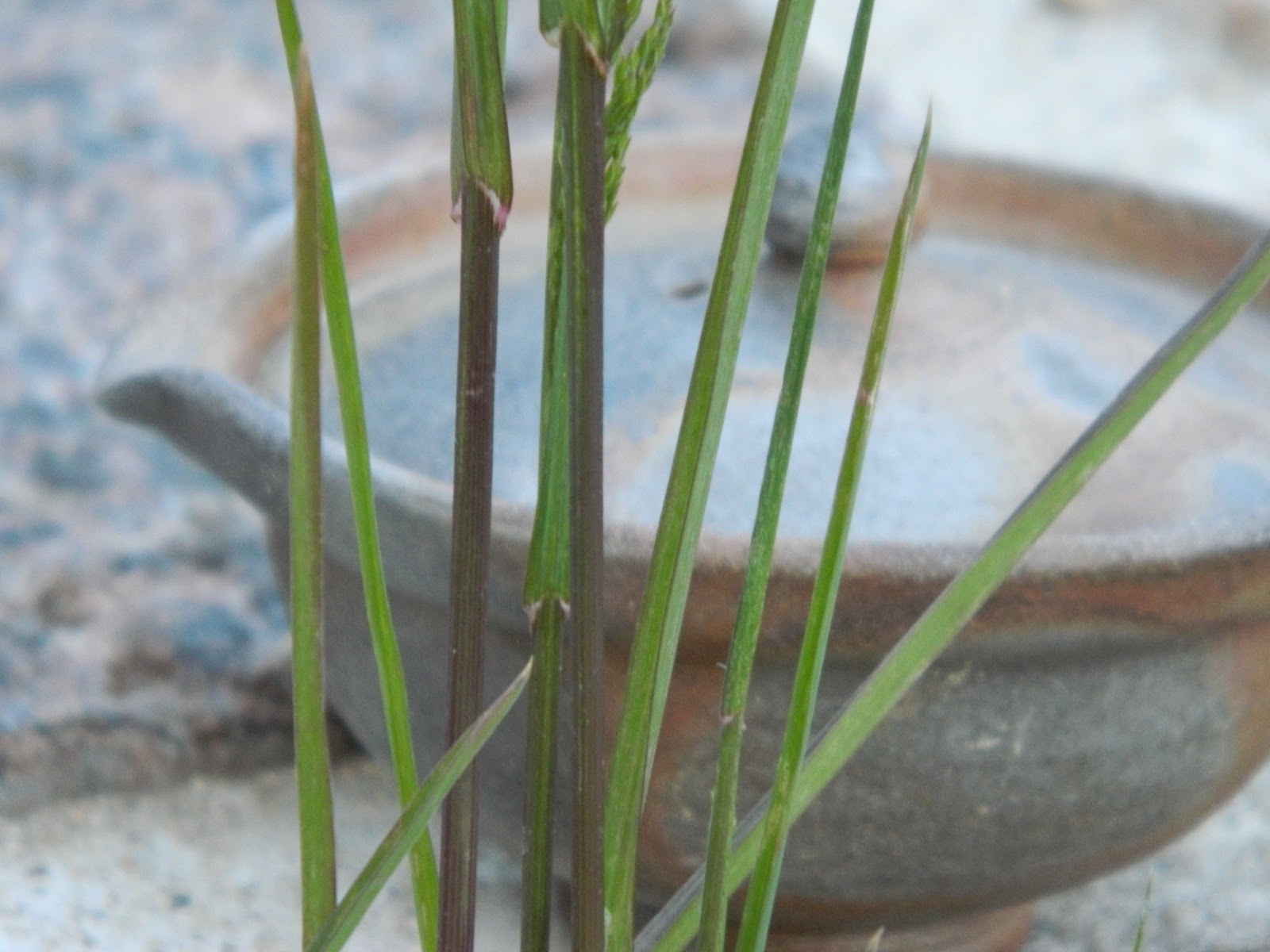
Gem Number Four- A Stone behind Grass

This Gem is already with me for couple of weeks- I just could not find few free minutes, with good light, to take pictures of it. After all, it is not going anywhere. So finally here it is- unglazed shiboridashi with cup. It is very simple, just like a stone. It was fired in part of the kiln where, when temperature reaches its top, we throw in charcoal. It is technique full of surprices, but it usually creates earthy, matt or/and rusty colors and surfaces. On this fine, pale stoneware we sometimes find this kind of lovely, multicolored and pleasant to touch surface which you can see on this fourth Gem.

For descriptions and more pictures please click here. If this "Ten Gems of Ten Kilns" project is new to you, please read this post first.


Thank you for reading!

Wednesday, May 2, 2012

YiXing clay in the middle of Europe

As many potters I know, I also base my ceramic work on local materials. Getting to know the nature around you is very important as well as quite interesting part of potters live. But when Peter Stanik, owner of small tea/yixing business, offered me chunk of Zi Ni clay to try I couldn´t refused. The clay was send by YiXing potter Lui Ming Zhu. He added short note and the information that they fire it in between 1050- 1150°C was the most important one. Well, temperature in our kiln varies from 1220 to 1380°C. It means that we can make clear clay glaze from that Zi Ni! But many low-fire clays can survive in coldest parts of our kiln, near chimney, so let's try it anyway...
Clay has very unusual hue of brown color, with hint of purple. It is without sand or another larger, rough particles in it. On first touch you can feel its plasticity. I got around 1,3kg of clay and I was decided to try to create some teapots from it. But first, I had to make some tests and see how it will work in or kiln. I made several small cones and laid out them around kiln chamber. I put some of them to hot places, some to colder and some even to chimney.
 Yes, although over-fired, almost all cones have survived. Those near chimney look very promising. So now I could start to work on first Czech Yixing teapot...
120 grams of Zhu Ni clay...

For 100ml teapot I usually need around 120g of clay. Plus I need some clay for lids and spouts. It means that if everything will go well I can make seven teapots. For the first shot I decided to go for trio. I have to say, this kind of clay is pleasure to work with. It is very smooth, plastic and strong. I haven´t expected such malleable material; it is great, at least for small forms. Here you can see several pictures from the process.


We usually do our first, bisque firing, in electric kiln and mostly to around 1000°C. From my experience, it is crucial for such high iron, low fire clays to be bisque fired in oxidation or neutral atmosphere. If such pot, made from iron rich, low-fire clay, is fired in stronger reduction without first firing it in oxidation you will find it bubbled or collapsed much sooner. That is why I have "bisqued" those three teapots even though I was not going to glaze them. 
On the right side you can see all three teapots fired to 1000°C...
After firing...
As you see I let those teapots in bare-clay rendition. All three can hold around 120ml and walls are pretty thin. There are some points on each of them, which I see now as imperfections. But I was going for natural and my-own look and feeling. From this point of view I am more then happy.


Footprints of the fire...

Attentive readers of my blog already know that one of them has become part of my Gem Collection. Second one stay with me, as part of my young sheng tea sessions. And the third one went as a gift to Peter Stanik's hands as my thanks for the opportunity to try this wonderful clay. At the end, you can take a look at Lui Ming Zhu's work from this clay here.

2011 Xi Zi Hao Ding Jia Lao Zhai Xiao Beeng Cha...long, long name for those leaves in my new teapot
Thank you for reading...